A Day in the Dandeli Jungle, Hour by Hour
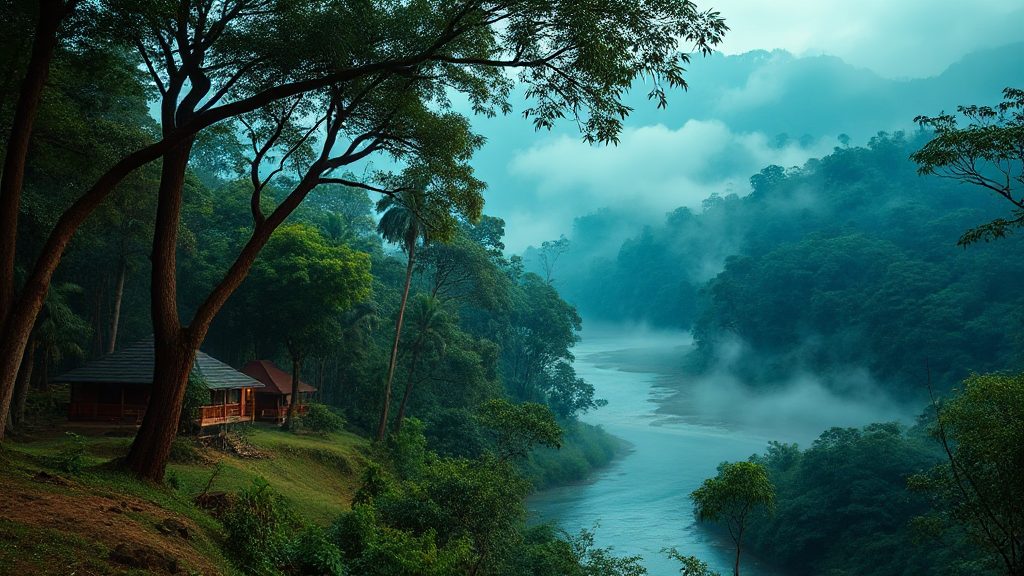
At 5:40 a.m., the mist is still deciding what to do with the treeline. It hangs in soft sheets between the canopies, thinning just enough for a first bird call to cut through — a sharp, bright note that seems to test the air before the rest of the forest agrees to wake. I am sitting on the step of a cottage at one of the dandeli jungle resorts, notebook open, pen cold in my hand, listening for the sequence. This is not advice. It is a log — one full day inside a jungle stay, recorded as it happened, from dawn mist to the night sounds that close the circle.
What follows is a diary of hours, not a checklist. If you have ever wondered what a stay in the forest actually feels like from the inside — before you book, before you pack — this is the rhythm of a single day, observed closely and written down slowly.
5:40 a.m. — Mist, First Light, and the Opening Chorus
The first light does not arrive as a colour. It arrives as a texture. The grey of the mist turns faintly silver, then the silhouettes of the trees sharpen by degrees, and somewhere above the cottage roof a bird begins a three-note phrase that repeats, patient and unhurried. Within minutes, others answer from different directions — a low cooing from the left, a rapid chatter from the right, a distant call that sounds like a question no one answers.
I count seven distinct voices before 6:00 a.m. The air is cool enough to see my breath, damp enough that the wooden railing feels slick. A resort staff member passes quietly with a torch switched off, walking the path by memory. Nothing about the morning feels staged. The mist moves at its own pace, lifting from the lower shrubs first, then from the taller trees, until the canopy is clear and the light turns a soft, pale gold.
This is the hour that stays with you longest. Even before coffee, even before breakfast, the forest has already given you something — a soundscape that no city morning can imitate.
7:15 a.m. — Breakfast, Birdsong, and the Slow Thaw of the Day
By 7:15, the mist has retreated to the far side of the property, and the dining area smells of filter coffee and something warm off the griddle. Guests drift in slowly, still wrapped in the quiet of the early hours. A couple at the next table is comparing notes on the birds they heard; someone else is flipping through a field guide with the seriousness of a detective.
The light is now clean and horizontal, catching the dew on the grass and turning the forest edge into a study in green and gold. Breakfast is unhurried — there is no schedule pressing against it. The jungle stay does not rush you into the day; it lets the day assemble itself around you. By the time the plates are cleared, the temperature has climbed a few degrees and the cicadas are tuning up for their long performance.
I write down one line in the notebook: The morning does not ask anything of you. It is a small observation, but it explains why so many people come to this part of the Western Ghats and then find it hard to leave.
9:30 a.m. — The Forest Walk and the Art of Noticing
At 9:30, a small group gathers for a guided nature walk. The path is not dramatic — no cliffs, no grand vistas — and that is precisely the point. The guide stops every few minutes to point out what most of us would walk past: a spiderweb strung between two shrubs, beaded with leftover dew; a leaf with edges cut in perfect semicircles by a patient insect; a patch of bark that looks like a map of rivers.
We hear a woodpecker before we see it, a rapid drumming that echoes through the trees. The guide identifies it by sound alone, then finds it on a high branch, a small silhouette against the light. Everyone stands still. For a few minutes, the forest feels like a room with many doors, and we are learning to knock on them quietly.
This is the part of a jungle stay that surprises first-time visitors. It is not about spotting something rare. It is about recalibrating your attention until the ordinary becomes worth watching. By the time we return to the resort, my notebook is full of small, unremarkable things that now seem remarkable.
12:45 p.m. — Heat, Hush, and the Afternoon Lull
By 12:45, the forest has changed its voice. The birds have gone quiet, the cicadas have taken over, and the light has turned white and heavy. This is the hour of hush. Guests retreat to shaded verandas, to hammocks, to the cool interiors of their cottages. The resort itself seems to slow down — fewer footsteps on the paths, quieter conversations, the soft whir of a ceiling fan.
I sit on the veranda and watch the heat shimmer above the grass. A langur moves through a distant tree with the unhurried confidence of an animal that knows it is not being watched. Somewhere a wood pigeon calls, low and sleepy. The afternoon is not wasted; it is simply paced differently. In a place like this, rest is not an interruption of the experience — it is part of it.
For anyone comparing dandeli jungle resorts, this midday lull is worth understanding. The best stays are designed around the forest’s rhythm, not against it. Shade, silence, and a cool place to lie down are not luxuries here; they are the architecture of a good afternoon.
4:00 p.m. — River Light and the Return of Movement
At 4:00, the heat begins to loosen its grip. The light turns amber, and the forest stirs again. On the river, the water catches the late sun and breaks it into moving pieces. This is the hour when adventure activities resume — the rafts, the kayaks, the guided walks along the bank. The river is not a backdrop here; it is the pulse of the place, and the afternoon is when you feel it most clearly.
I watch a raft navigate a stretch of gentle rapids, the paddles flashing in the light, the voices carrying across the water and then fading. The sound is not intrusive. It belongs to the afternoon the way the birdsong belonged to the morning. Later, guests return with wet hair and wide smiles, comparing stories of the water. The resort’s packages often include rafting, and it is easy to see why — the river gives the day its second act.
By 5:30, the light is golden and low, and the forest edge is busy again. Birds move through the undergrowth, insects rise in columns above the grass, and the first bats begin their silent, erratic flights. The day is turning.
7:30 p.m. — Night Sounds and the Closing of the Circle
By 7:30, the forest has gone dark, and the sounds have changed completely. The cicadas are louder now, a steady, electric hum that fills the air. Somewhere a nightjar calls — a strange, churring note that seems to come from everywhere and nowhere. The paths are lit just enough to follow, and the stars above the clearing are dense and bright in a way that city eyes forget.
Dinner is warm and unhurried, served with the easy conversation of people who have spent the day outdoors. Afterward, some guests sit around a small fire; others walk quietly to the edge of the property to listen. The jungle at night is not silent — it is full of small, precise sounds that reward patience. A rustle in the leaf litter. A distant call. The soft, rhythmic pulse of the river.
I close the notebook at 9:00 p.m., though the day is not really over. The rhythm simply continues without me. What strikes me most, writing this up later, is how completely the hours belonged to the place. Nothing felt scheduled for convenience. The mist came when it came; the birds sang when they sang; the river ran at its own pace. A stay at one of these forest properties is less an itinerary than an invitation to fall into that rhythm — and the best way to choose one is to look for the places that protect it. If a resort can hold this sequence intact, from the 5:40 mist to the 7:30 nightjar, it is worth the journey.